
Sciatica Isn’t Just Back Pain! What’s Actually Happening Inside Your Body?

Most people think sciatica is just another type of lower back pain. That assumption is the first mistake. Sciatica is not a muscle problem it’s a nerve problem. Specifically, it involves the sciatic nerve, the longest nerve in your body, which runs from your lower spine down to your legs. When this nerve gets compressed or irritated, the pain doesn’t stay localized. It travels.
This is why what feels like “back pain” often shows up as shooting pain in the leg, tingling in the foot, or even numbness. Treating it like regular back pain delays real relief.
What’s actually happening inside your body:
- A disc bulge, herniation, or spinal misalignment is pressing on the sciatic nerve
- The nerve signal gets disrupted, causing pain to radiate instead of staying in one spot
- Inflammation builds around the nerve, increasing sensitivity and pain intensity
- Muscles around the area tighten defensively, making compression worse—not better
- Blood flow to the affected nerve reduces, slowing down natural healing
Most treatments fail because they target muscles instead of removing pressure from the nerve. Painkillers dull the sensation. Physiotherapy may strengthen surrounding muscles. But if the nerve is still compressed, the problem is still active.
Until the pressure on the sciatic nerve is reduced, relief will always be temporary. This is the shift most patients miss and the reason they stay stuck in cycles of short-term relief and recurring pain.
Why Most Sciatica Treatments Fail to Deliver Lasting Relief?

Most sciatica treatments are designed to reduce pain—not eliminate the cause. That’s the core problem. When the focus is only on symptom management, patients may feel temporary comfort, but the underlying nerve compression remains untouched. This creates a cycle where the pain disappears briefly, then returns—often worse.
The system isn’t built for resolution. It’s built for short-term management. And patients don’t realize this until they’ve already spent time, money, and energy on treatments that don’t hold.
Where most treatments go wrong:
- Painkillers suppress symptoms but do nothing to relieve nerve pressure
- Physiotherapy often focuses on muscle strength, not nerve decompression
- Bed rest reduces movement but can increase stiffness and delay recovery
- Generic exercises are prescribed without identifying the root cause
- Treatments are standardized, not tailored to the individual’s condition
The deeper issue is misdiagnosis at the level of understanding. Sciatica is treated like a muscular issue when it’s primarily neurological. As long as that confusion exists, treatments will continue to miss the mark.
Lasting change only happens when the pressure on the sciatic nerve is addressed directly. Without that, every form of “relief” is temporary by design—not by accident.
The Hidden Cause: Nerve Compression vs Muscle Pain Confusion
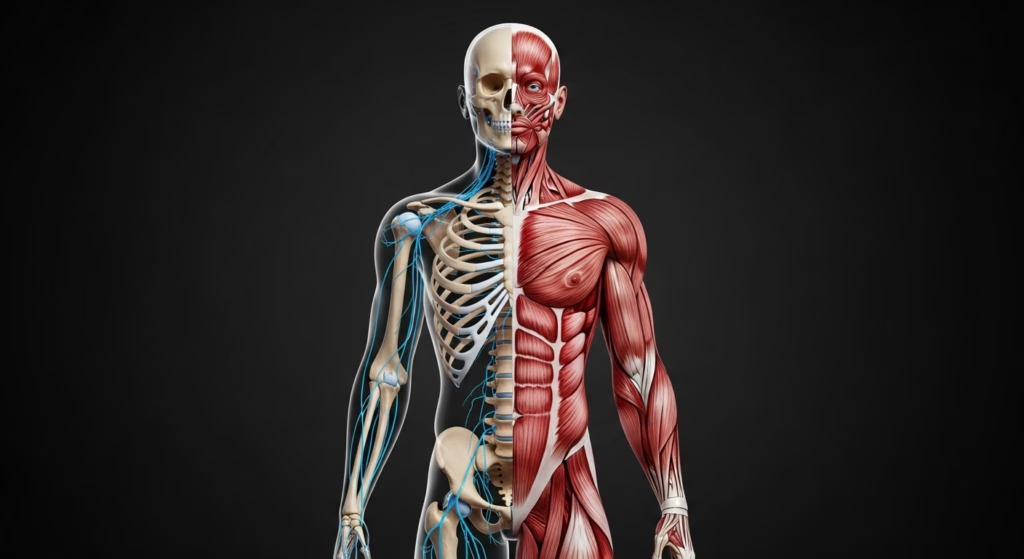
Most patients and even many treatments misidentify sciatica as a muscle problem. That’s the root confusion. Tight muscles are visible, easy to blame, and simple to treat. But in sciatica, muscle tension is usually a reaction, not the cause. The real issue sits deeper: pressure on the sciatic nerve.
When this distinction is missed, treatment goes in the wrong direction. You can relax muscles, stretch them, or strengthen them but if the nerve is still compressed, the pain signal doesn’t stop.
Key differences patients overlook:
- Muscle pain stays localized; nerve pain radiates down the leg
- Muscle stiffness improves with rest; nerve pain can worsen with inactivity
- Stretching relieves muscle tension; it may aggravate compressed nerves
- Muscle issues don’t cause tingling or numbness; nerve compression does
- Painkillers ease muscle soreness; nerve pain often persists or returns quickly
This confusion leads to a false sense of progress. Patients feel temporary ease after massages or stretches and assume healing is happening. It isn’t. The pressure on the nerve remains, and symptoms come back.
Real progress begins when treatment shifts focus from muscles to the nerve itself. Until that shift happens, you’re managing symptoms not solving the problem.
What Patients Typically Try First (And Why It Doesn’t Work)

When sciatica starts, most patients don’t think “nerve compression.” They think “back pain.” So they follow the most obvious, accessible solutions painkillers, rest, basic physiotherapy, or home remedies. The problem isn’t that these are wrong. The problem is they’re incomplete.
These approaches are designed for general pain, not nerve-specific issues. So while they may reduce discomfort temporarily, they fail to address the actual trigger behind sciatica.
What patients usually try first:
- Over-the-counter painkillers to quickly reduce discomfort
- Bed rest to avoid movement and prevent worsening pain
- Basic physiotherapy focused on stretches and strengthening
- Hot/cold packs to manage inflammation and stiffness
- Massage therapies targeting tight muscles
The short-term result often feels positive. Pain reduces. Movement improves slightly. This creates the illusion that the problem is being solved. But underneath, the nerve is still compressed.
This is where most people lose time. They cycle through these methods, expecting cumulative improvement. Instead, the relief plateaus and then the pain returns. Sometimes sharper, sometimes more widespread.
The issue isn’t effort. It’s direction. Until treatment directly reduces nerve pressure, these early-stage solutions will continue to deliver temporary comfort not lasting change.
Ayurvedic Approach to Sciatica: Treating the Root, Not the Symptom

Ayurveda does not start with the pain it starts with the cause behind the pain. In the case of sciatica, that means identifying why the sciatic nerve is under pressure and correcting the internal imbalance creating that compression. This is a fundamentally different approach from conventional methods that focus on suppressing symptoms.
Instead of isolating the problem to a single area, Ayurveda looks at the body as a connected system. Sciatica is often linked to aggravated Vata dosha, which governs movement, nerve function, and circulation. When Vata is disturbed, it leads to dryness, degeneration, and nerve irritation creating the conditions for compression and pain.
How the Ayurvedic approach differs:
- Focuses on reducing nerve compression, not just masking pain
- Identifies underlying imbalances (like Vata aggravation) causing the issue
- Uses therapies that improve circulation around the affected nerve
- Aims to reduce inflammation at the root level, not just symptomatically
- Combines internal (medication) and external (therapies) treatments
This approach is slower at the surface level but deeper in impact. Instead of chasing quick relief, it works to create an environment where the nerve can recover naturally without constant irritation.
The result is not just reduced pain, but improved stability in the long run. When the root cause is addressed, the recurrence cycle breaks. That’s the difference between temporary comfort and sustained recovery.
The Core Therapy: How Ayurvedic Treatments Decompress the Sciatic Nerve

Most treatments attempt to “manage” sciatica. Ayurvedic therapy is structured to physically and functionally reduce the pressure on the sciatic nerve. That’s the difference. It doesn’t rely on a single method it uses a combination of therapies designed to improve circulation, release deep-seated tension, and gradually create space around the compressed nerve.
This is not instant relief through suppression. It’s progressive decompression through targeted intervention. Each therapy plays a role in reducing inflammation, relaxing surrounding tissues, and restoring normal nerve function.
How Ayurvedic therapies work on nerve decompression:
- Medicated oil therapies penetrate deep tissues to reduce stiffness and inflammation
- Heat-based treatments improve blood flow around the compressed nerve
- Controlled pressure techniques release tension in surrounding muscles
- Therapies help realign functional imbalances contributing to compression
- Internal herbal support reduces systemic inflammation and supports nerve health
The key is combination and consistency. No single session “fixes” sciatica. The body is guided out of a compressed, inflamed state step by step. As pressure reduces, nerve irritation decreases and symptoms begin to fade.
This is why patients often notice a shift not just in pain, but in mobility, flexibility, and overall comfort. The goal is not temporary relief. The goal is to change the condition that created the pain in the first place.
7. Step-by-Step: What Happens During Treatment at HATC
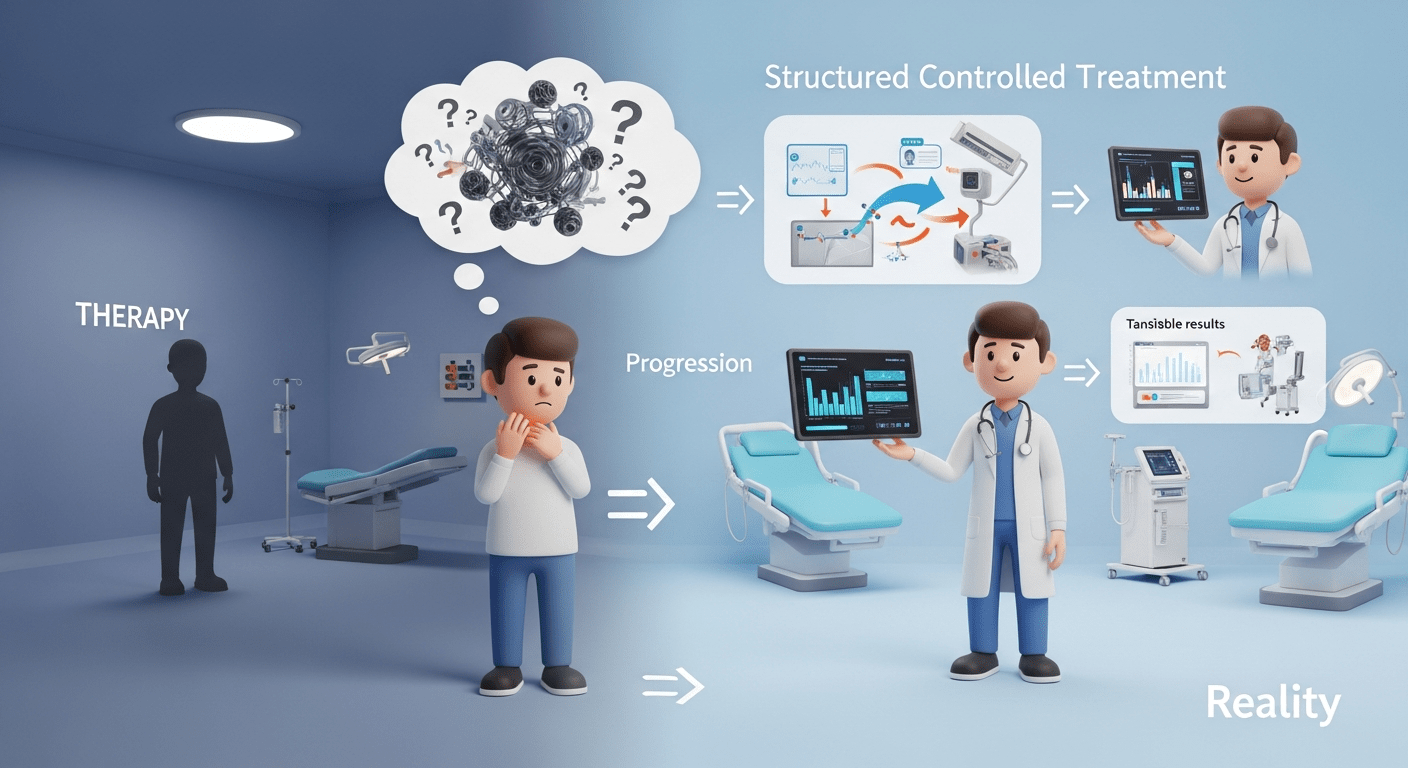
Most patients hesitate because they don’t know what the treatment actually involves. Uncertainty creates resistance. When people imagine “therapy,” they assume something generic or uncomfortable. The reality is structured, controlled, and progressive.
At HATC, treatment is not a one-size process. It follows a sequence designed to first understand the condition, then gradually reduce nerve pressure through targeted intervention.
What the treatment process typically looks like:
- Initial assessment to identify the exact cause and severity of nerve compression
- Evaluation of posture, movement patterns, and pain triggers
- Selection of personalized Ayurvedic therapies based on body type and condition
- Application of medicated oils to reduce stiffness and improve tissue response
- Heat-based therapies to enhance circulation and relax deep muscle layers
- Targeted manual techniques to release tension around the affected nerve
The first few sessions focus on calming the system—reducing inflammation and easing sensitivity. This is where patients start noticing early changes in pain intensity and mobility.
As treatment progresses, the focus shifts to deeper correction. The goal is to reduce the mechanical pressure on the nerve and stabilize the area so the problem doesn’t keep returning.
This structured approach removes guesswork. Each step has a purpose. And more importantly, each step builds on the previous one—moving from temporary comfort toward long-term stability.
8. How Fast Can You Expect Relief? (Realistic Timelines, Not Promises)
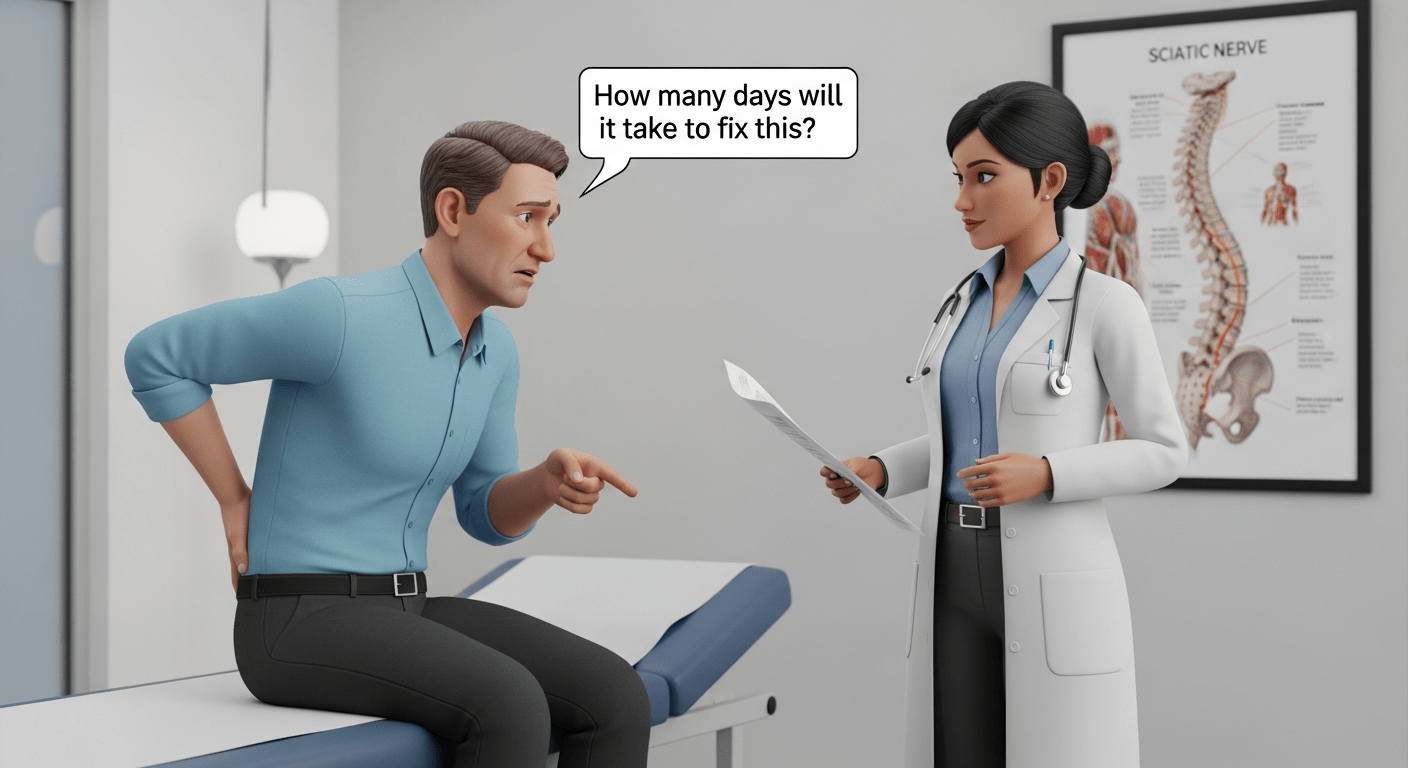
Most patients ask the same question: “How many days will it take to fix this?”
That question assumes sciatica is a quick-fix problem. It isn’t. It’s a condition built over time—through posture, strain, and internal imbalance. So expecting instant results sets you up for disappointment.
What actually matters is not speed—but direction. Are you reducing nerve pressure or just masking pain? That determines whether relief lasts or repeats.
What influences your recovery timeline:
- Severity of nerve compression (mild irritation vs chronic compression)
- How long you’ve had symptoms before starting treatment
- Consistency in following the treatment plan
- Daily habits like sitting posture, movement, and activity level
- Overall body condition, including inflammation and mobility
Most patients start noticing changes within the first few sessions—usually in the form of reduced pain intensity or improved movement. But that’s not full recovery. That’s early response.
Real improvement happens in phases. First, pain reduces. Then mobility improves. Finally, stability builds—where the pain stops coming back.
The mistake is chasing fast relief instead of complete recovery. Fast relief is easy to achieve. Lasting stability requires a structured process and consistency.
If you approach treatment with the right expectation—not “how fast,” but “how correctly”—you get results that hold, not results that fade.
9. Who This Treatment Works Best For — And Who It Won’t Help

Not every treatment works for everyone. And pretending it does is how people waste time and money. Ayurvedic therapy for sciatica is effective—but only when the condition matches the method. The goal here is not to convince everyone. It’s to filter who will actually benefit.
This approach works best when the problem is functional and reversible—not when structural damage has progressed too far.
This treatment works best for:
- People with mild to moderate sciatic nerve compression
- Patients experiencing radiating pain, tingling, or numbness
- Those who haven’t found lasting results with painkillers or basic physiotherapy
- Individuals with posture-related or lifestyle-driven sciatica
- Patients willing to follow a structured treatment plan consistently
On the other side, there are cases where this approach has limitations. Ignoring that reality leads to poor outcomes.
This treatment may not be suitable for:
- Severe disc prolapse requiring immediate surgical intervention
- Advanced neurological deficits (significant loss of strength or control)
- Conditions where structural damage is beyond functional correction
- Patients expecting instant results without consistency
- Individuals unwilling to adjust lifestyle factors contributing to the problem
The key is alignment between the condition and the method. When that alignment exists, results are predictable and stable. When it doesn’t, no treatment—Ayurvedic or otherwise—will deliver what the patient expects.
This is not about excluding people. It’s about setting the right expectation so the right patients get the right outcome.
10. Why Early Intervention Matters More Than Intensity of Pain
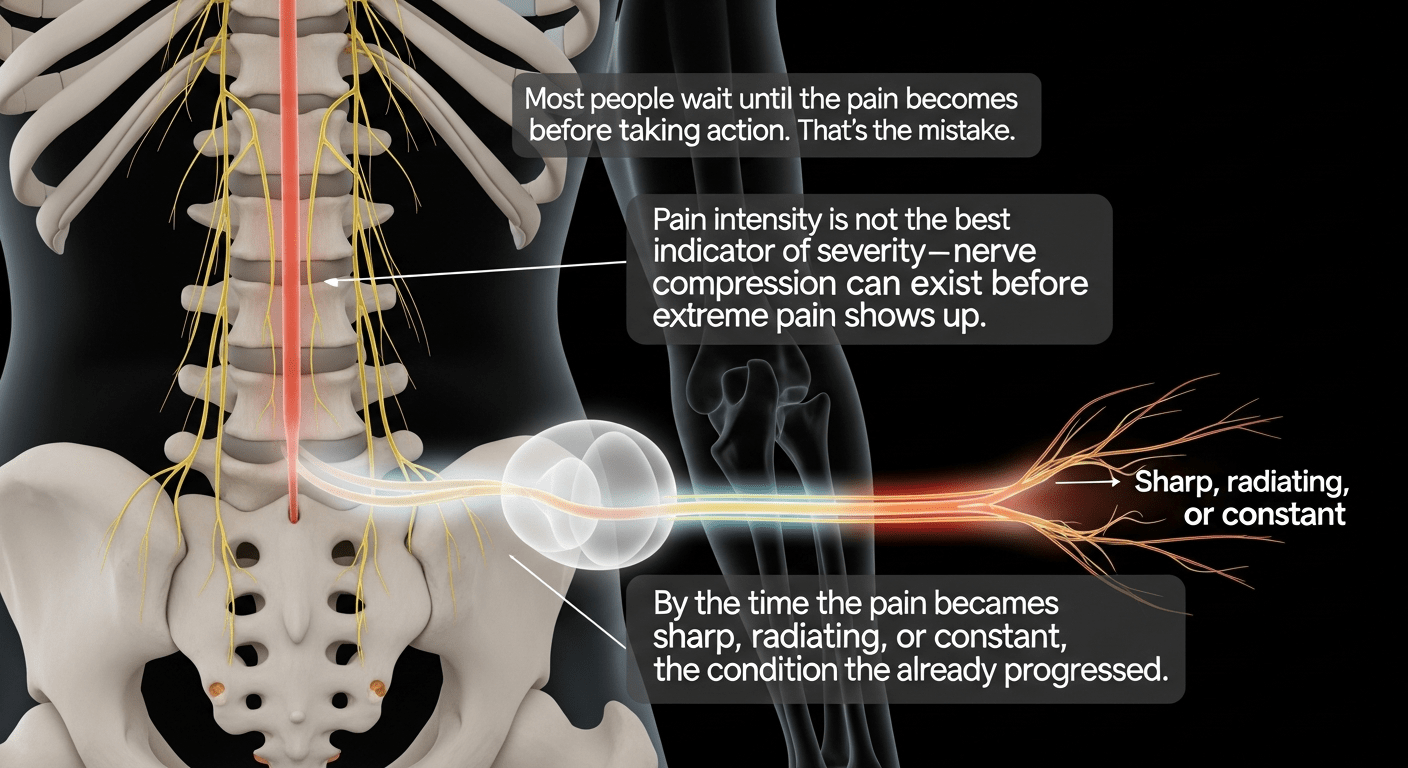
Most people wait until the pain becomes unbearable before taking action. That’s the mistake. Pain intensity is not the best indicator of severity—nerve compression can exist long before extreme pain shows up. By the time the pain becomes sharp, radiating, or constant, the condition has already progressed.
Early-stage sciatica is easier to reverse because the compression is still developing. Late-stage sciatica is harder because the body has adapted to the dysfunction—through inflammation, muscle guarding, and reduced mobility.
Why acting early changes outcomes:
- Mild compression is easier to relieve than chronic, long-term pressure
- Inflammation is lower, making recovery faster and more stable
- Muscles haven’t fully adapted into protective tightness patterns
- Nerve irritation hasn’t progressed into persistent sensitivity
- Treatment requires less time and fewer interventions
The problem is perception. People ignore early signs like mild tingling, occasional leg pain, or stiffness because it feels manageable. But that’s the window where correction is simplest.
Once the condition escalates, treatment shifts from correction to management. More sessions. More effort. Slower progress.
The smarter move is not waiting for pain to justify action. It’s acting when the problem is still easy to reverse. Early intervention doesn’t just reduce pain—it reduces the cost, time, and complexity of recovery.
11. Lifestyle Triggers That Keep Sciatica Coming Back

Most people focus only on treatment and ignore what’s causing the problem daily. That’s why sciatica keeps returning. Even if therapy reduces nerve compression, the same habits that created the issue will bring it back.
Sciatica is not just a condition—it’s often a pattern. And that pattern is driven by how you sit, move, work, and recover.
Common lifestyle triggers that worsen or restart sciatica:
- Long hours of sitting, especially with poor posture
- Lack of movement or prolonged inactivity during the day
- Incorrect lifting techniques that strain the lower back
- Weak core muscles leading to poor spinal support
- Sleeping positions that put pressure on the lower spine
- Sudden increase in physical activity without preparation
These triggers don’t cause pain instantly. They build pressure gradually. That’s why many people feel “fine” until the pain suddenly appears again.
The mistake is treating sciatica as a one-time issue instead of an ongoing mechanical problem influenced by daily behavior.
If lifestyle doesn’t change, treatment becomes temporary by default. You may feel better after sessions—but the same triggers will recreate the same condition.
Long-term stability comes from two things working together: reducing nerve compression through treatment, and removing the habits that caused it in the first place. Without both, recurrence is not a possibility—it’s a pattern.
12. What to Do Alongside Treatment for Faster Recovery
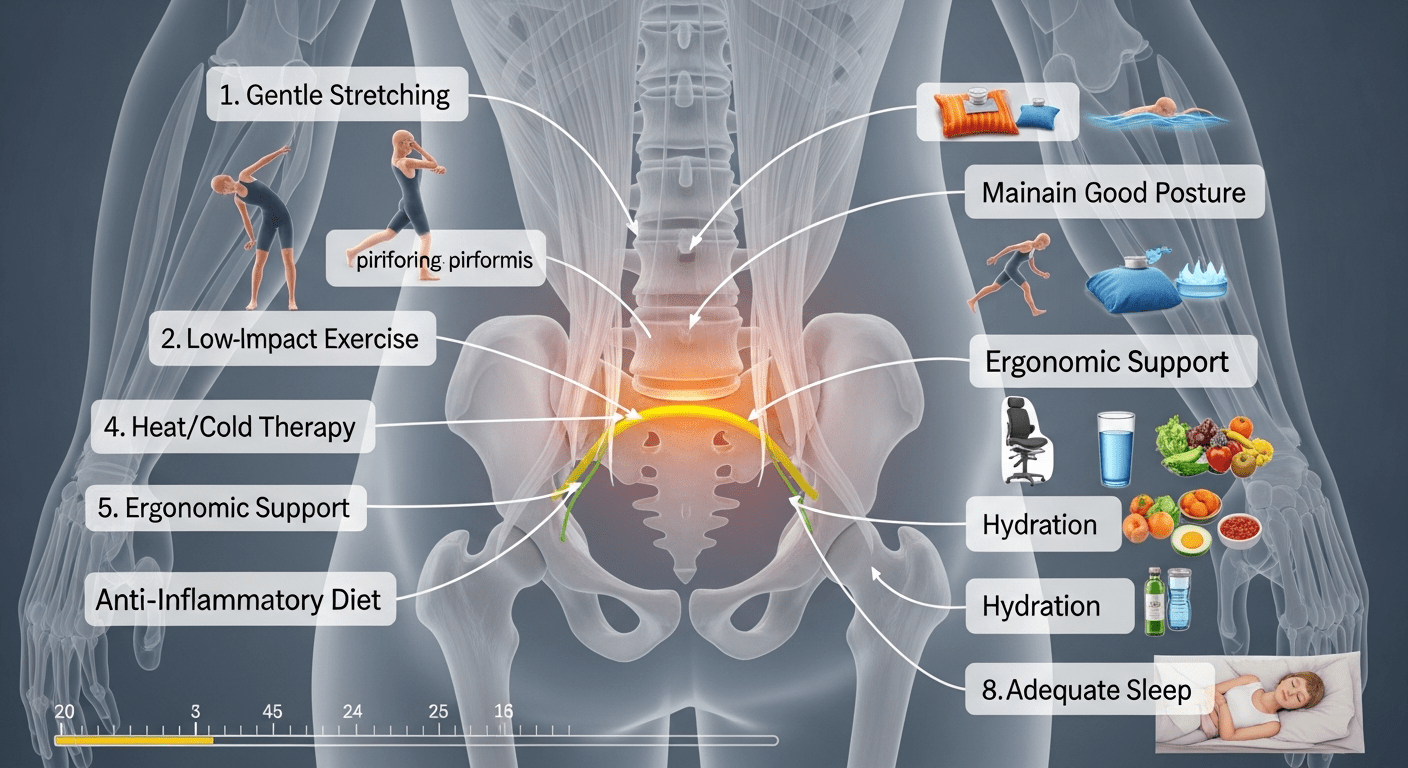
Treatment alone is not enough. If you rely only on therapy sessions and ignore what happens the other 23 hours of the day, recovery slows down. The body doesn’t heal during treatment—it responds to what you consistently do outside of it.
This is where most patients lose progress. They attend sessions, feel better, then return to the same habits that caused the compression in the first place.
What actually supports faster recovery:
- Maintain proper sitting posture, especially during long work hours
- Take regular movement breaks instead of staying in one position
- Follow simple, guided stretches (not random exercises)
- Avoid sudden strain like heavy lifting or jerky movements
- Use supportive sleeping positions that reduce lower back stress
- Stay consistent with any internal medications or recommendations
These actions are not optional—they are part of the treatment. They reduce daily stress on the sciatic nerve, allowing the therapies to work more effectively.
The difference between slow recovery and fast recovery is not intensity—it’s consistency. Small corrections done daily create better outcomes than occasional effort.
If you treat recovery as a passive process, progress will be slow. If you treat it as a structured routine—both inside and outside the clinic—you shorten the timeline and improve stability.
13. Cost vs Outcome: Is Ayurvedic Sciatica Treatment Worth It?

Most people evaluate treatment based on cost per session. That’s the wrong metric. The real question is: does the treatment reduce the root cause, or are you paying repeatedly for temporary relief?
Cheap treatments that don’t solve the problem become expensive over time. You keep returning, keep spending, and keep dealing with the same pain cycle.
What most people don’t factor into cost:
- Repeated spending on painkillers and temporary fixes
- Lost productivity due to recurring pain and discomfort
- Time spent moving between different treatments without results
- Mental fatigue from dealing with chronic, unresolved pain
- Long-term progression if the condition is left partially treated
Ayurvedic treatment may feel like a higher upfront commitment—both in time and cost. But the objective is different. It’s not designed for short-term relief. It’s structured to reduce recurrence.
The real value comes from outcome, not price. If a treatment reduces nerve compression and stabilizes the condition, the need for ongoing spending drops significantly.
If it doesn’t, even a low-cost option becomes expensive in the long run.
The decision is simple: pay for temporary comfort repeatedly, or invest in a method that aims to reduce the problem at its source.
14. How to Choose the Right Clinic in Bangalore (And What to Avoid)
Most people choose a clinic based on convenience, price, or surface-level claims. That’s exactly how they end up with inconsistent results. Sciatica is not a condition you experiment with—it requires a method that actually addresses nerve compression, not just symptoms.
The problem is, many clinics offer “sciatica treatment,” but very few have a structured approach to solving it. This is where decisions go wrong.
What to look for in the right clinic:
- A clear diagnosis process—not just starting treatment immediately
- Focus on identifying nerve compression, not just labeling it as back pain
- Customized treatment plans instead of the same therapy for everyone
- Combination of therapies (oil, heat, manual techniques), not a single method
- Clear explanation of what’s being done and why
- Realistic timelines, not exaggerated promises of instant results
At HATC, the approach is built around one principle: reduce the pressure on the nerve, not just the pain. That means every step—from assessment to therapy selection—is designed to move toward that outcome.
What to avoid (this is where most people go wrong):
- Clinics that offer the same package for every patient
- Overpromising “quick fixes” or guaranteed results in a few days
- Treatments focused only on massage or surface-level relief
- Lack of explanation about the root cause of your condition
- No guidance on lifestyle or follow-through outside the clinic
Choosing the wrong clinic doesn’t just delay recovery—it can worsen the condition by allowing compression to continue unchecked.
The right clinic will not just treat you—it will make you understand what’s happening, why it’s happening, and how the treatment is fixing it.
That clarity is what leads to results.
15. When to Seek Help: Warning Signs You Shouldn’t Ignore
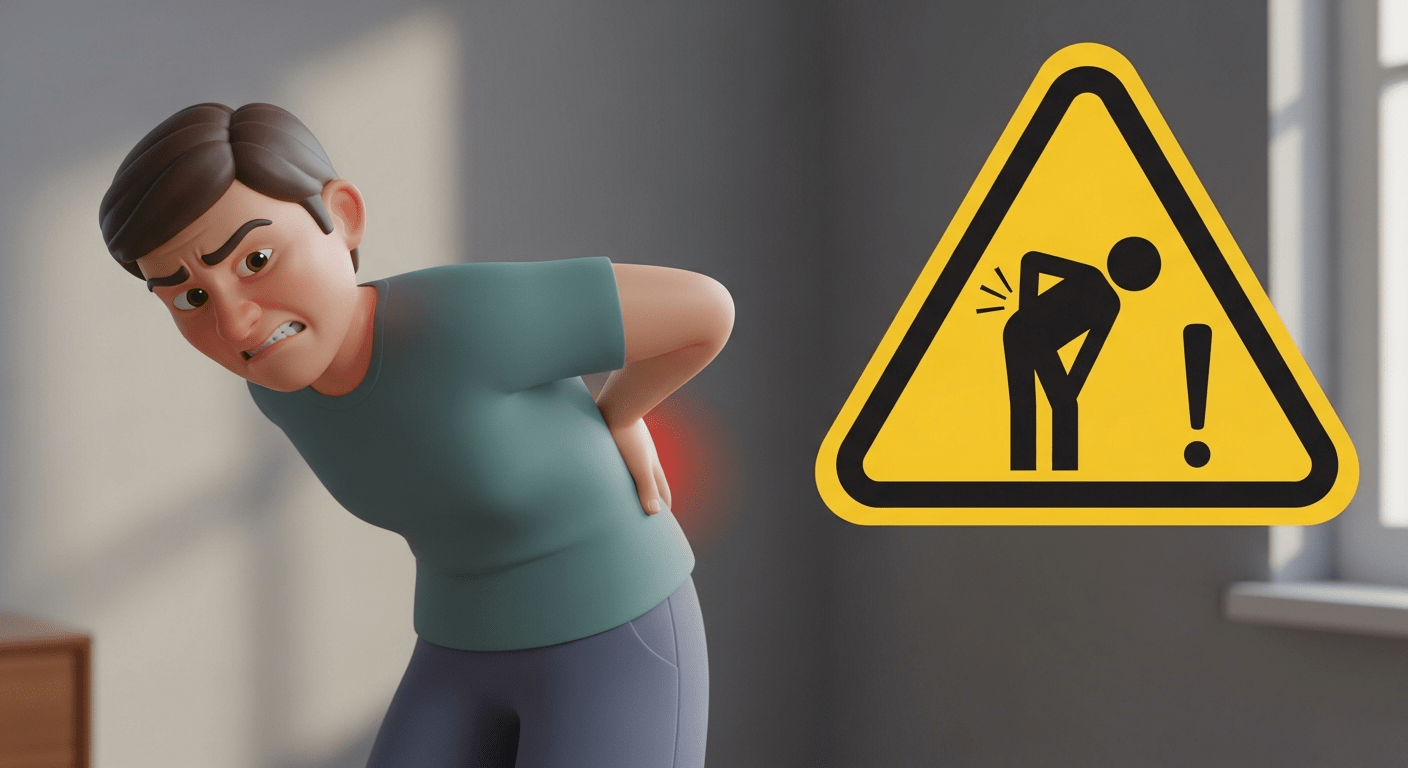
Most people delay treatment because the pain feels “manageable.” That delay is what turns a reversible condition into a prolonged one. Sciatica doesn’t always start with severe pain—it often begins with small, inconsistent signals that are easy to ignore.
The mistake is waiting for intensity. By the time pain becomes sharp or constant, the nerve has already been under pressure for a while.
Warning signs you should not ignore:
- Pain radiating from the lower back down one leg
- Tingling, numbness, or a “pins and needles” sensation in the leg or foot
- Pain that worsens with sitting or prolonged inactivity
- Sudden sharp pain while bending, lifting, or standing up
- Weakness in the leg or difficulty maintaining balance
- Pain that keeps returning even after temporary relief
These signs indicate that the nerve is being affected—not just muscles. Ignoring them doesn’t make them go away. It allows the compression to continue and often worsen.
Early action keeps the problem simple. Delay makes it complex.
If you notice these patterns repeating, the decision is straightforward: don’t wait for the pain to become unbearable. Address it while it’s still manageable.
That’s the difference between quick correction and long-term management.
16. Next Step: How to Book a Consultation at HATC
At this point, the question is not “Will this work?”—it’s whether your condition matches the approach. And the only way to know that is through a proper assessment. Guesswork leads to wasted time. Clarity leads to the right decision.
Booking a consultation is not about committing to treatment. It’s about understanding your condition correctly before choosing the next step.
What happens when you book a consultation:
- Your symptoms and history are reviewed in detail
- The exact source and level of nerve compression are assessed
- You get clarity on whether this approach is suitable for your case
- A structured treatment plan is outlined (if applicable)
- Expected timelines and process are explained clearly
This step removes uncertainty. Instead of trying random solutions, you move forward with a defined direction.
The mistake most people make is delaying this step—trying multiple things first, hoping something works. That delay often makes the condition harder to treat.
If your symptoms are recurring or not improving, the next logical step is simple: get clarity before taking further action.
That’s how you avoid wasted effort—and move toward a solution that actually fits your condition.
Support Tools You Can Use at Home (Optional)
Treatment fixes the root. But what you do daily either supports that progress—or slows it down.
These tools don’t replace therapy. They reduce strain between sessions.
Useful support products (practical, not hype):
- Lumbar support belts help stabilize the lower back during movement
- Orthopedic seat cushions reduce pressure while sitting for long hours
- Back support pillows improve posture in office chairs and cars
- These tools reduce daily stress on the sciatic nerve
Used correctly, they help maintain alignment and prevent unnecessary strain between treatments.
But here’s the part most people misunderstand.
These tools do not fix sciatica.
They support recovery. They don’t replace it.
If the nerve is compressed, no cushion or belt will remove that pressure permanently.
When to Use Them (and when not to)
- Use during long sitting hours (office, driving)
- Use during early recovery phase for support
- Avoid over-dependence—your body still needs movement and correction
- Don’t rely on them as a “solution”
Short Disclaimer
Some links above may be affiliate links. This means we may earn a small commission at no extra cost to you. These products are optional and meant only for support—not a substitute for professional treatment.
Bottom Line
If your daily habits caused the problem,
your daily setup must support the solution.