

You’re Not Gaining Weight Because You’re Lazy
If you work in an office, chances are you’ve asked yourself this question at least once probably while staring at your reflection:
“Why am I gaining weight when I spend most of my day working?”
Here’s what nobody tells you: it’s not your fault, and it’s definitely not laziness. The answer has less to do with your job itself and more to do with physics. Literally.
When you sit for 8-10 hours a day, your body requires dramatically fewer calories to function. If you’re eating the same amount as you did in a more active role or before the job those extra calories don’t vanish. They get stored. Often, they cluster right around your midsection (thanks, biology).
The good news? Thousands of office workers have cracked the code. They’re losing 1-2 pounds per week without quitting their jobs or spending two hours in the gym. And you can too. This guide will show you exactly why desk jobs contribute to belly fat, the specific mistakes keeping you stuck, and 7 proven strategies you can start implementing today even if you’ve tried everything before.
Why Your Desk Job Is Making You Gain Weight
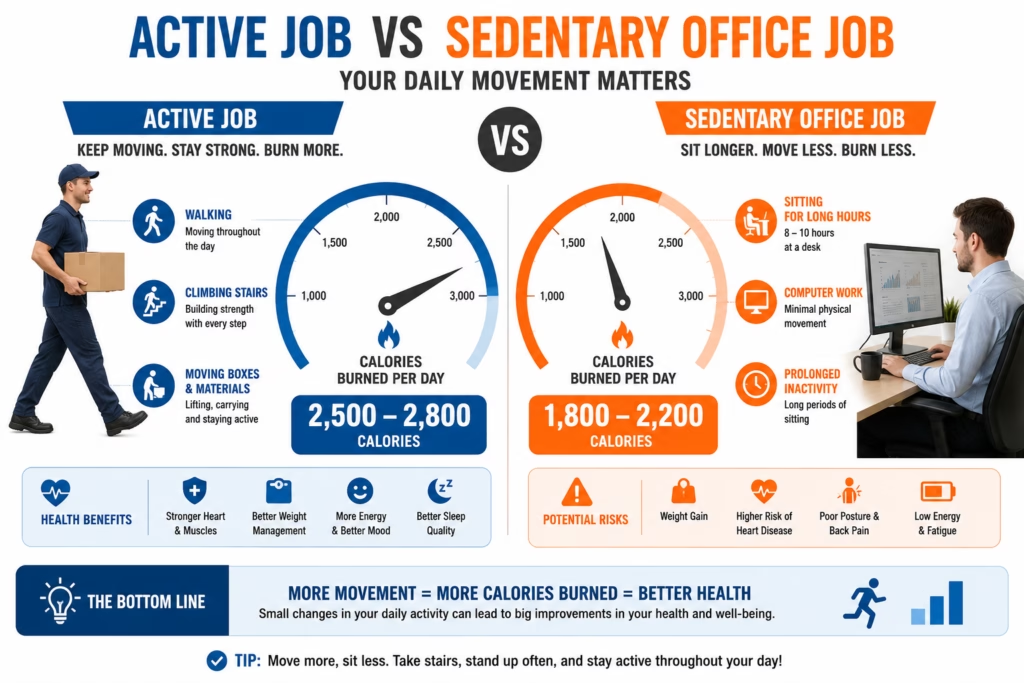
The Calories In, Calories Out Problem
Let’s start with the basics: weight gain happens when you consume more calories than you burn.
But here’s where most people get stuck. They think: “I eat the same as I always did, so why am I gaining?” The answer is that your calorie burn has dropped significantly.
A typical office worker’s daily movement breakdown:
- Walking to/from transport: 5-10 minutes
- Meetings (standing): 0-30 minutes, depending on the day
- Restroom/coffee breaks: 5-10 minutes
- Sitting at desk: 7-9 hours
Compare this to just 20 years ago, when people had to:
- Walk to get information (library, colleague’s desk)
- Stand in line to do tasks
- Manually handle paperwork
- Move between physical locations
The math is brutal: A moderately active job might burn 2,500-2,800 calories per day. A sedentary desk job burns 1,800-2,200 calories per day. That’s a 600-1,000 calorie daily deficit you’re not accounting for without even trying.
Over 6 months, that’s 108,000 to 180,000 extra calories stored as fat.
Where Does Belly Fat Come From? (Visceral vs. Subcutaneous)
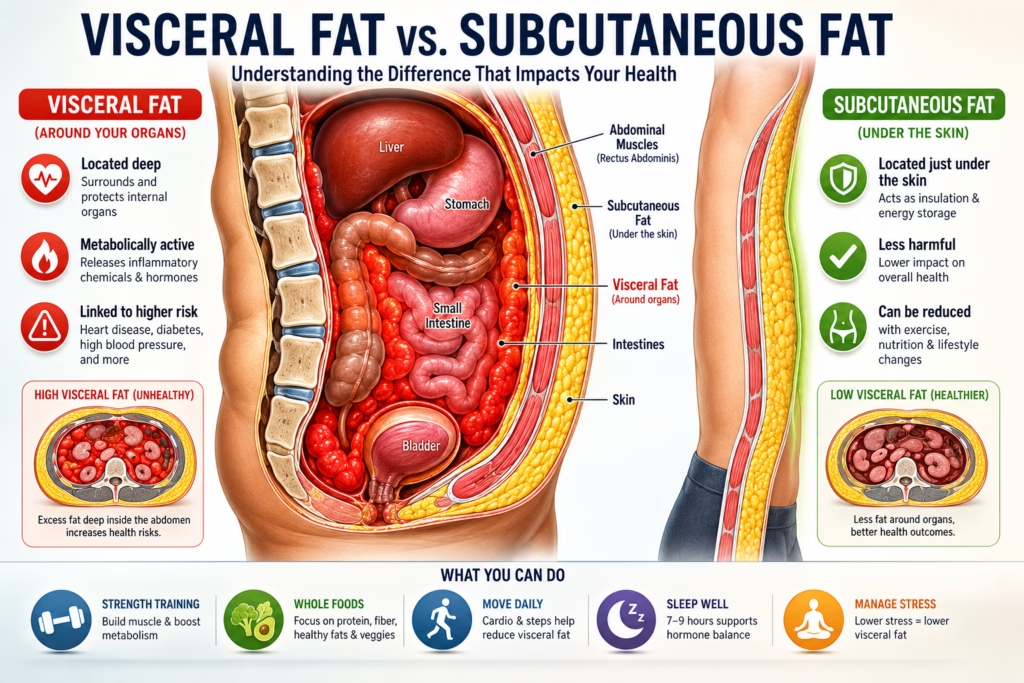
Your body doesn’t distribute fat randomly. When you’re sedentary, most excess calories are stored as visceral fat the dangerous kind that wraps around your organs.
Why? Because:
- Your core muscles aren’t engaged while sitting. They atrophy slightly.
- Your posture worsens. Sitting encourages slouching, which compresses your abs and makes belly fat more visible.
- Stress hormones (cortisol) spike with a sedentary lifestyle, and cortisol preferentially stores fat around the belly.
- Your metabolism slows. Sedentary work reduces muscle mass, which is your body’s primary calorie-burning engine.
The silver lining: visceral fat is actually the easiest fat to lose first when you make changes. It responds quickly to movement and diet adjustments.
The 5 Mistakes Office Workers Make (And How You’re Probably Making Them)
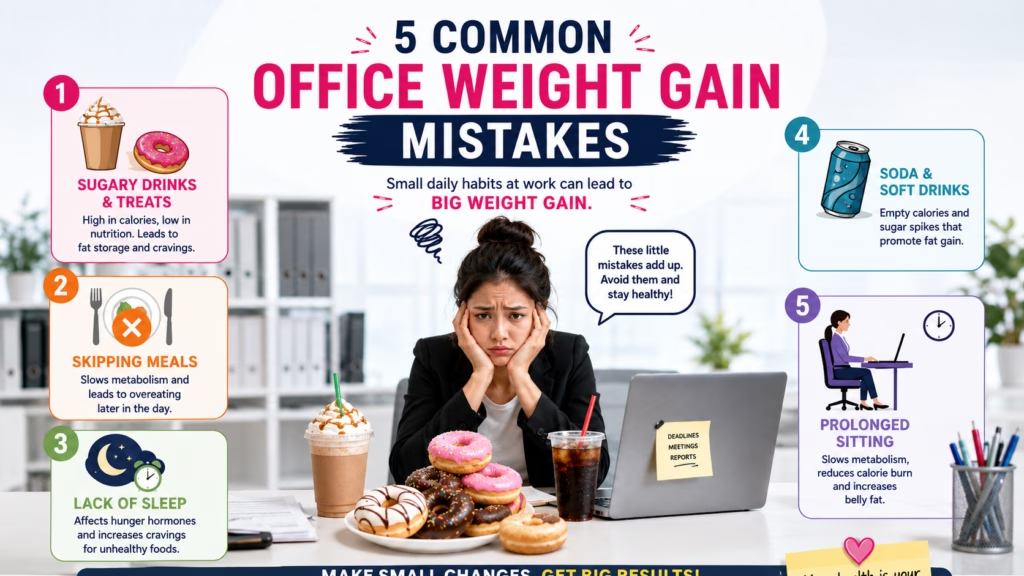
Mistake #1: Eating “Office Worker Calories”
You’re not hungry, but it’s 3 PM, and there’s a donut in the break room. Or you’re stressed about a deadline, so you grab chips.
The problem: Sedentary work leaves you with fewer calories to “spend” on snacks. A 200-calorie snack might be 10% of your daily deficit. Do that twice a day, and you’ve wiped out any hope of weight loss.
The fix: Don’t eliminate snacks outsource the decision. Pre-pack 2-3 snacks before work (almonds, Greek yogurt, fruit). Eat those instead of deciding in the moment.
Mistake #2: Drinking Calories You Don’t Account For
Coffee with cream and sugar. Energy drinks. Afternoon sodas. Alcohol after work.
These add 300-500 calories per day for many office workers and they don’t register as “eating.”
The fix: Switch to black coffee, herbal tea, or sparkling water. If you drink 2 coffees with cream daily, this alone saves ~200 calories (20,800 per year).
Mistake #3: Skipping Lunch or Eating Too Little
Counterintuitive, but restricting calories too much actually prevents belly fat loss.
When you skip lunch or eat a tiny salad, your body:
- Enters a slight starvation mode
- Holds onto belly fat (it’s reserved for emergencies)
- Triggers afternoon cravings and overeating at night
The fix: Eat 3 balanced meals with protein at each one. Protein = satiety + muscle preservation.
Mistake #4: Assuming You Need to Exercise for 2 Hours
This is the biggest myth. Most office workers think: “If I sit all day, I need to go to the gym for 2 hours to make up for it.”
They burn out in 3 weeks.
The fix: You don’t need a gym. You need to increase daily movement. This is covered in Strategy #3 below.
Mistake #5: Forgetting About Sleep
You’d be shocked how many office workers are gaining weight because they’re sleeping 5-6 hours a night.
Sleep deprivation increases cortisol, increases hunger hormones (ghrelin), and decreases satiety hormones (leptin). You can eat perfectly and exercise perfectly and still gain weight on 5 hours of sleep.
The fix: Aim for 7-9 hours. Even 7 hours makes a difference.
7 Proven Strategies to Lose Belly Fat (Without Leaving Your Desk)
Strategy #1: Fix Your Eating Window (Intermittent Fasting Lite)
You don’t need to do extreme intermittent fasting. But you do need to be intentional about when you eat.
The simple version:
- Stop eating 2-3 hours before bed
- Don’t eat for 30-60 minutes after waking
- Eat your meals within a 10-12 hour window
This gives your digestive system a break and allows your body to tap into fat stores at night (when you’re not constantly refueling).
Real example:
- Last meal: 8 PM
- First meal: 7:30 AM next day
- You’ve naturally created an 11.5-hour fasting window with zero effort
Why it works: This isn’t about “starvation mode” it’s about not constantly signaling your body to store energy. When you eat all day (breakfast at 6 AM, snack at 9 AM, lunch at 12 PM, snack at 3 PM, dinner at 7 PM, dessert at 9 PM), your body is in constant storage mode.
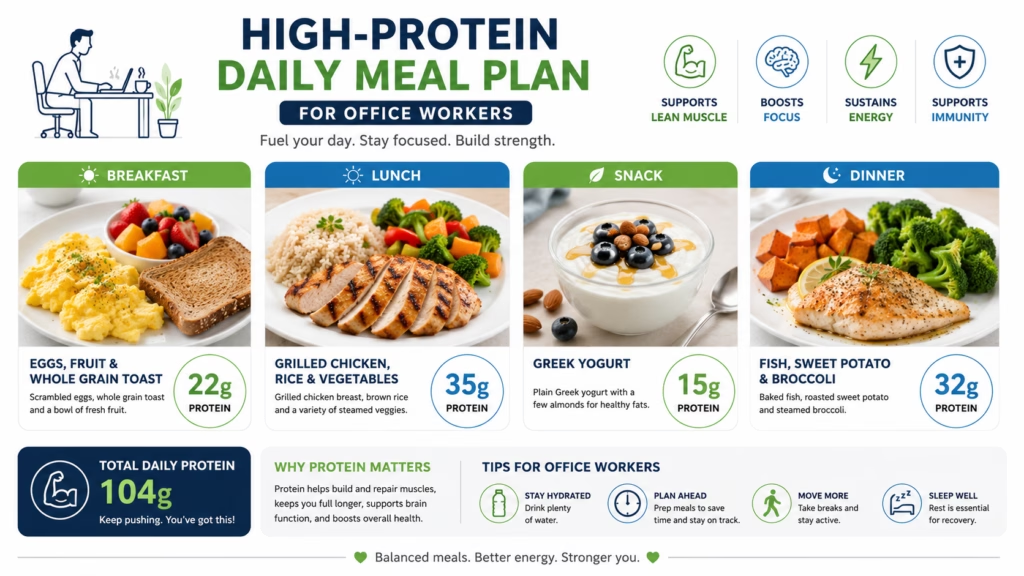
Strategy #2: Eat More Protein (The Easiest Calorie Hack)
Here’s a hack that feels like cheating:
Protein has a higher thermic effect than carbs or fat. This means your body burns more calories digesting it.
Eating 30% of your calories from protein instead of 15% can boost your daily calorie burn by 100-150 calories with zero additional effort.
How to do it:
- Breakfast: 2 eggs + toast + fruit (25g protein)
- Lunch: Chicken + rice + veggies (35g protein)
- Dinner: Fish + sweet potato + broccoli (35g protein)
- Snack: Greek yogurt (15g protein)
Total: ~110g protein per day
Most office workers eat 40-50g. Just hitting 100g+ changes everything.
Why it matters: Protein also preserves muscle while you’re losing weight. Muscle = your calorie-burning engine. Keep it, and weight loss gets easier.
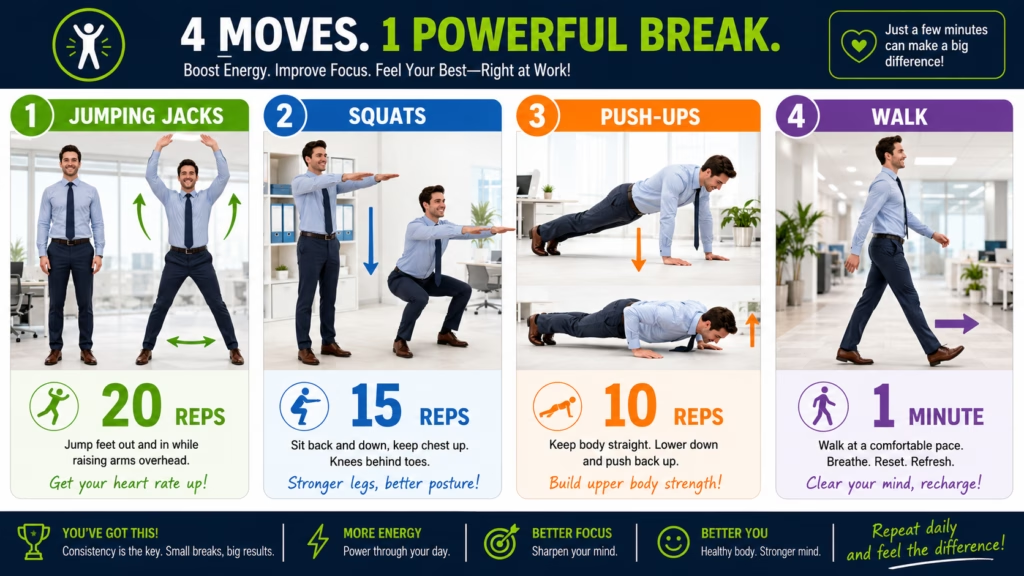
Strategy #3: The 2-Minute Desk Break Movement Protocol
This is where most of the magic happens.
You don’t need a gym. You need to interrupt sitting every 1-2 hours.
Every 90 minutes, do this for 2 minutes:
Option A (Active):
- 20 jumping jacks
- 15 bodyweight squats
- 10 push-ups (or wall push-ups)
- 1 minute of walking around your office
Option B (Gentle, No Sweat):
- 2 minutes of walking stairs
- 50 desk push-ups (hands on desk, lean in and out)
- 30-second wall sit
- Walk to a colleague’s desk instead of emailing
Why this works:
- Increases heart rate briefly = calorie burn
- Engages core muscles = better posture + visible abs
- Prevents metabolism from slowing during sitting
- 6x per workday = 12 minutes total = 50-100 extra calories burned
Over a year, that’s 18,250-36,500 extra calories burned equivalent to 5-10 pounds of fat.
Hack: Set a phone alarm for 10 AM, 12 PM, 2 PM, 4 PM. When it goes off, do one of the options above.
Strategy #4: The Hydration Hack
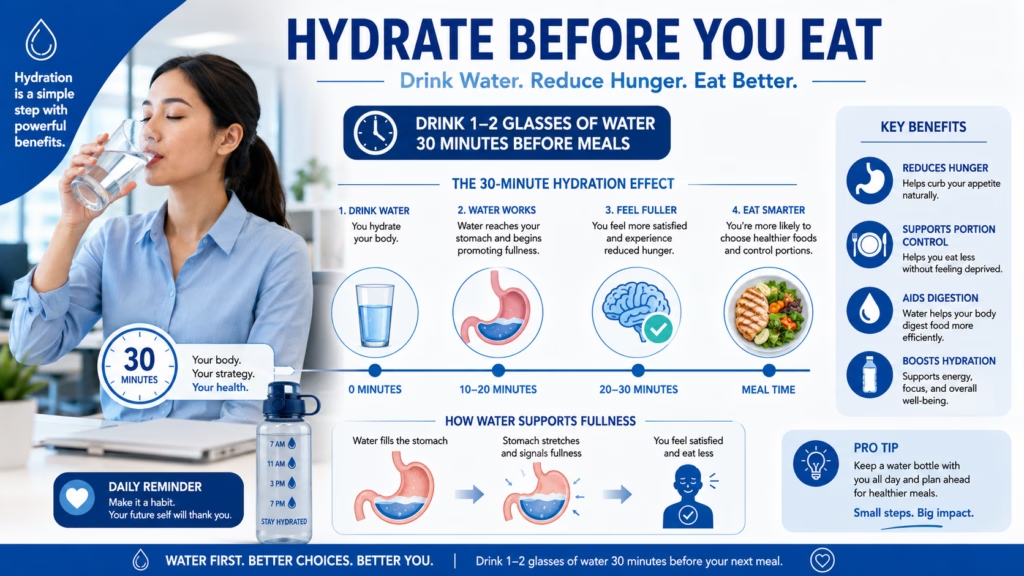
Drink water before meals.
Sounds simple? Here’s why it works:
- Drinking 500ml of water 30 minutes before eating reduces meal size by 13-30%
- Water fills your stomach, so you feel fuller faster
- Many people mistake thirst for hunger
The protocol:
- Glass of water when you arrive at work
- Glass before lunch
- Glass at 3 PM (kills the afternoon snack craving)
- Glass before dinner
Added bonus: You’ll make more bathroom trips, which means more opportunities for Strategy #3 (movement).
Strategy #5: Walk for 15 Minutes After Eating
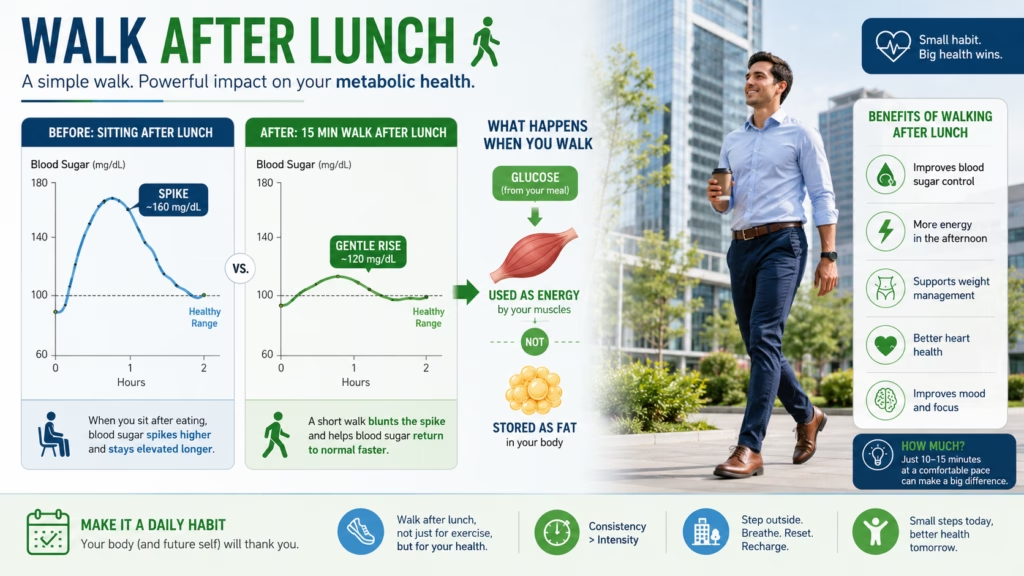
This is one of the most underrated fat-loss strategies.
After you eat, your blood sugar spikes. If you sit, that sugar gets stored as fat. If you move, it gets used as energy.
The science: Walking for just 15 minutes after meals reduces blood sugar spikes by 20-30%, which means less insulin release, which means less fat storage.
How to do it:
- Lunch at 12 PM → Walk from 12:15-12:30 PM (just around your office/building)
- Dinner at 7 PM → Walk from 7:15-7:30 PM
That’s 30 minutes of movement per day while lowering your body’s fat-storage signals.
Real result: One study showed people who walked after meals lost more belly fat in 12 weeks than people who exercised for 30 minutes at a different time.
Strategy #6: Fix Your Posture (Yes, Really)
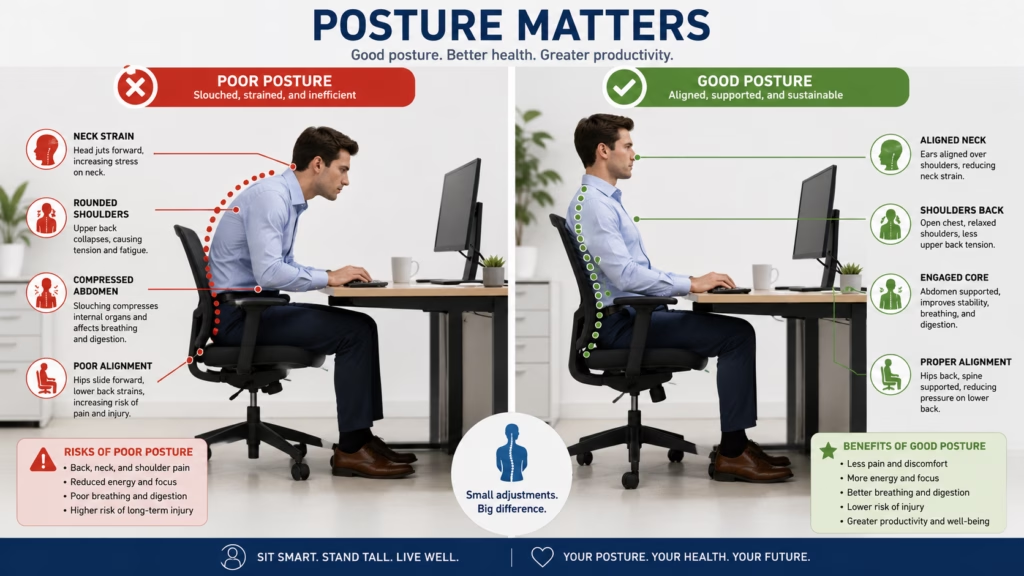
Bad posture literally hides your abs and enables belly fat growth.
When you slouch:
- Your abs are compressed and disengaged
- Your core gets weaker over time
- Your appearance makes belly fat more visible
- Digestion worsens (hunched stomach = slower gastric motility)
The 60-second fix:
- Sit back in your chair
- Roll your shoulders back
- Engage your core (like you’re about to get punched in the stomach)
- Keep your chin parallel to the ground
- Take 3 deep breaths
Do this every hour. After 2 weeks, it becomes automatic.
Bonus: Better posture makes you look 5-10 pounds lighter immediately.
Strategy #7: Track What You’re Actually Eating (For 2 Weeks)
You don’t need to track forever, but you need a baseline.
Most office workers think they eat 1,800 calories and can’t lose weight. When they actually track, they’re eating 2,400.
How to do it:
- Download MyFitnessPal or a similar app (free)
- Log everything for 2 weeks (yes, everything even that piece of gum)
- Don’t change anything, just log
- After 2 weeks, you’ll know your actual baseline
From there, reduce by 300-500 calories per day. That’s 2,100-3,500 calories per week = 0.5-1 pound per week.
Why 300-500 and not more? Because aggressive deficits fail. You’ll get hungry, irritable, and quit. Slow + sustainable beats fast + burnout.
Your First Week Action Plan
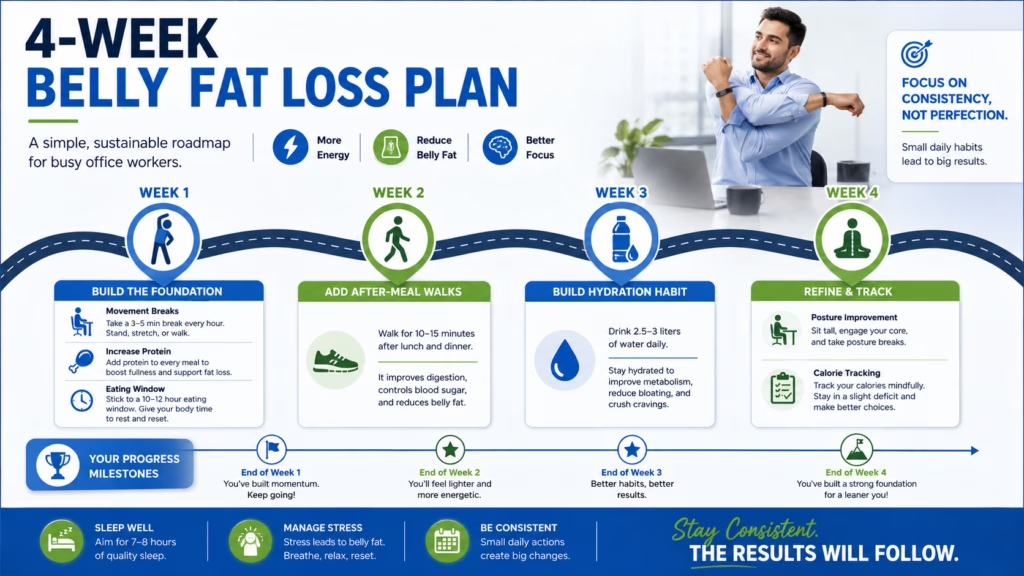
You don’t need to do all 7 strategies at once. That’s overwhelming.
Week 1: Do these 3 things
- Set alarm reminders for the 2-minute movement breaks (Strategy #3)
- Start your eating window (finish eating by 8 PM, first meal at 7:30 AM minimum) (Strategy #1)
- Add 20g more protein per day (extra chicken breast, Greek yogurt, eggs) (Strategy #2)
Week 2: Add this 4. Walk 15 minutes after lunch (Strategy #5)
Week 3: Add this 5. Drink water before meals (Strategy #4)
Week 4: Add these 6. Fix your posture every hour (Strategy #6) 7. Track your food for a baseline (Strategy #7)
What to Expect (Real Timeline)
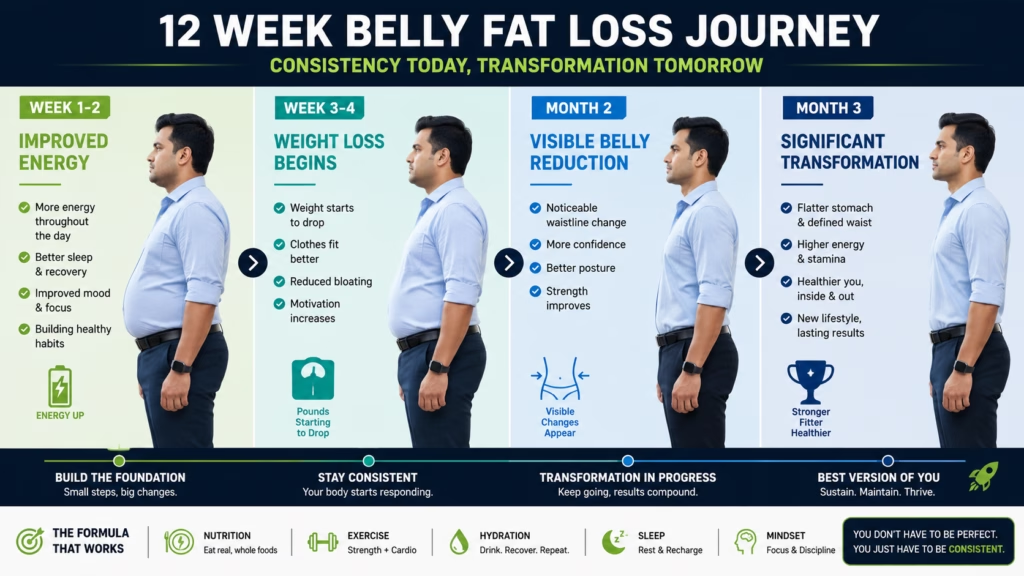
Weeks 1-2:
- More energy (better sleep window + movement)
- Slightly looser clothes (reduced bloating)
- Weight might not change much (water retention + muscle gain from movement)
Weeks 3-4:
- Weight starts coming down (0.5-1 lb per week)
- Energy continues improving
- Cravings decrease (better protein + blood sugar control)
Month 2:
- Visible belly fat reduction (especially if you’re doing the post-meal walks)
- Better posture = abs more visible
- 4-8 pounds lost
Month 3:
- Major difference (8-12 pounds lost)
- Colleagues notice (“Have you lost weight?”)
- Clothes fit differently
- More confidence
For Different Situations (Because You’re Not All the Same)
If You Travel a Lot for Work
- Do the 2-minute movement breaks in hotel rooms (jumping jacks, squats, push-ups)
- Eat protein-heavy breakfast (eggs, Greek yogurt, meat)
- Walk the hotel hallways after dinner
- Stay hydrated (easier than finding healthy food)
If You Have a High-Stress Job
- Prioritize sleep (cortisol is your enemy when stressed + sedentary)
- Do the post-meal walks (stress relief + blood sugar control)
- Eat protein (stabilizes mood + energy)
- Consider yoga or stretching (10 minutes reduces cortisol)
If You Have Joint Issues or Limited Mobility
- Replace jumping jacks with high knees or step-touches
- Do wall push-ups instead of floor push-ups
- Walk at your own pace (15 minutes after meals = movement, not speed)
- Focus on Strategies #1, #2, #4, #5 (nutrition + hydration)
If You’ve Tried Everything and Nothing Worked
- You were probably too aggressive (need 300-500 calorie deficit, not 1,000)
- You weren’t consistent (need 4+ weeks to see real change)
- You skipped sleep (non-negotiable for fat loss)
- Start with only strategies #1, #2, and the post-meal walks. Master these before adding more.
The Real Truth About Losing Belly Fat With a Desk Job
Your job is a constraint, not a death sentence.
Thousands of office workers lose 20-50+ pounds without:
- Changing careers
- Spending 2 hours in the gym
- Eating boring chicken and broccoli forever
- Doing extreme diets
They do it by making small, consistent changes that fit into their workday, not against it.
Your body responds to:
- Consistent calorie deficit (300-500/day)
- Regular movement (even if it’s just 2 minutes every 90 minutes)
- Adequate protein (prevents muscle loss)
- Good sleep (makes everything else work)
- Patience (12 weeks minimum to see major change)
You have everything you need. The question is: which strategy will you implement first?
Next Steps: Your Personalized Plan
Pick one strategy from the list above that feels most doable for you (not what you think you “should” do).
- Does your job allow movement breaks? → Start with Strategy #3
- Do you snack too much? → Start with Strategy #2 (protein)
- Do you eat too close to bed? → Start with Strategy #1
- Do you drink a lot of caffeine with sugar? → Start with Strategy #4
Master that one for 2 weeks. Then add another.
You’ve got this. Your desk job didn’t ruin your metabolism and these strategies will prove it.
FAQ
Q: Will this work if I don’t exercise at all? A: Yes. Weight loss is 80% diet, 20% exercise. You can lose weight with just the nutritional strategies. Exercise (like the movement breaks) speeds it up.
Q: How much weight can I realistically lose per month? A: 4-8 pounds per month is typical and sustainable. Anyone promising more is either not accounting for water weight or isn’t being realistic.
Q: Can I do this while eating out at restaurants? A: Yes. Restaurants serve massive portions (often 2,000 calories in one meal). Just eat half and take the rest home. Protein sources are usually available.
Q: What if I plateau after losing 10 pounds? A: Normal. Your body adapts. Either reduce calories by another 100-200, or increase movement slightly. The plateau usually breaks within 1-2 weeks.
Q: Do I need a gym membership? A: No. You need bodyweight + stairs + 15 minutes for walking. That’s free.